
Nov 18, 2026 - Manabi AI, a Learning App Linking Schools, Teachers, Students and Parents: Looking for Pilot Schools
We are developing Manabi AI, a learning app where schools, teachers, students and parents each see the same learning data from their own point of view. The AI tutor gives hints, not answers, and everything runs on the school’s own PCs. We are looking for pilot schools.
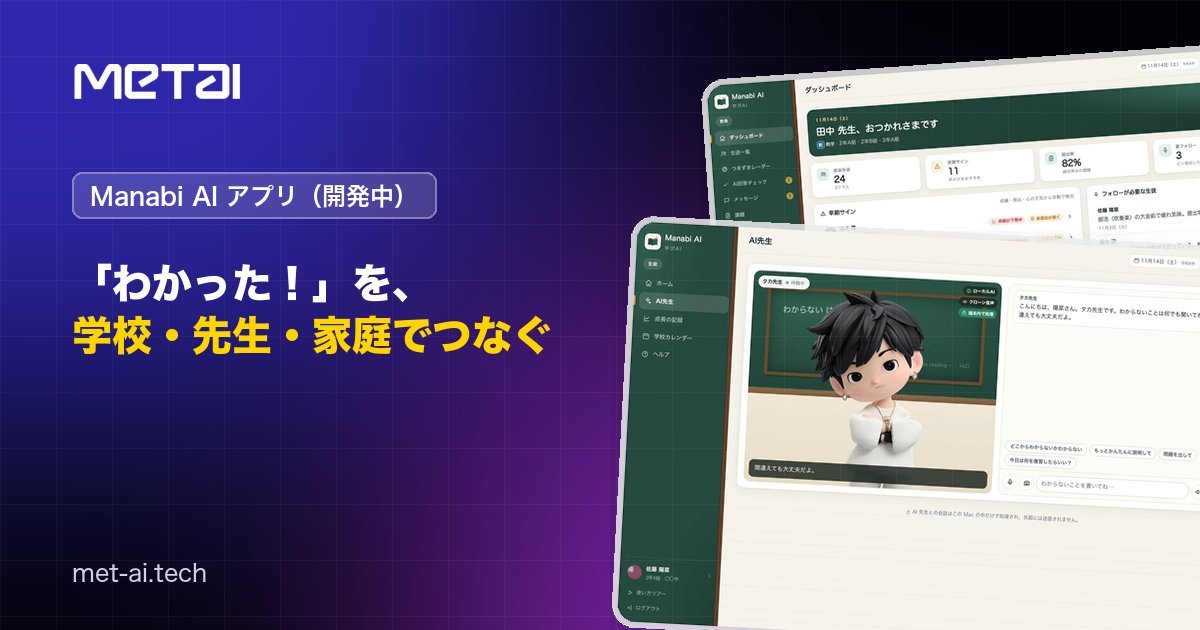
MetAI is developing Manabi AI, an AI learning app for elementary, junior high and high schools, vocational schools, universities and educational organizations. Schools, teachers, learners and parents each see the same learning data from their own point of view. It is currently a prototype, and we are looking for schools that would like to try it first.
What is happening in classrooms today
- Going home without asking: too shy to raise a hand, or not enough time. The question stays unanswered.
- No time to notice changes: one teacher looks after dozens of students, and small changes are hard to see.
- Families cannot see school life: “How was your day?” “Fine.”
- More children cannot come to school: about 350,000 elementary and junior high students in Japan were long-term absent in fiscal 2024 (Ministry of Education survey), rising for 12 years in a row.
Manabi AI aims to connect these four in a single app.
One app, four entrances
- School: understanding across the school, class status, staff and student management, consent management.
- Teacher: early signs, a “stumbling radar”, assignments and AI-assisted question writing.
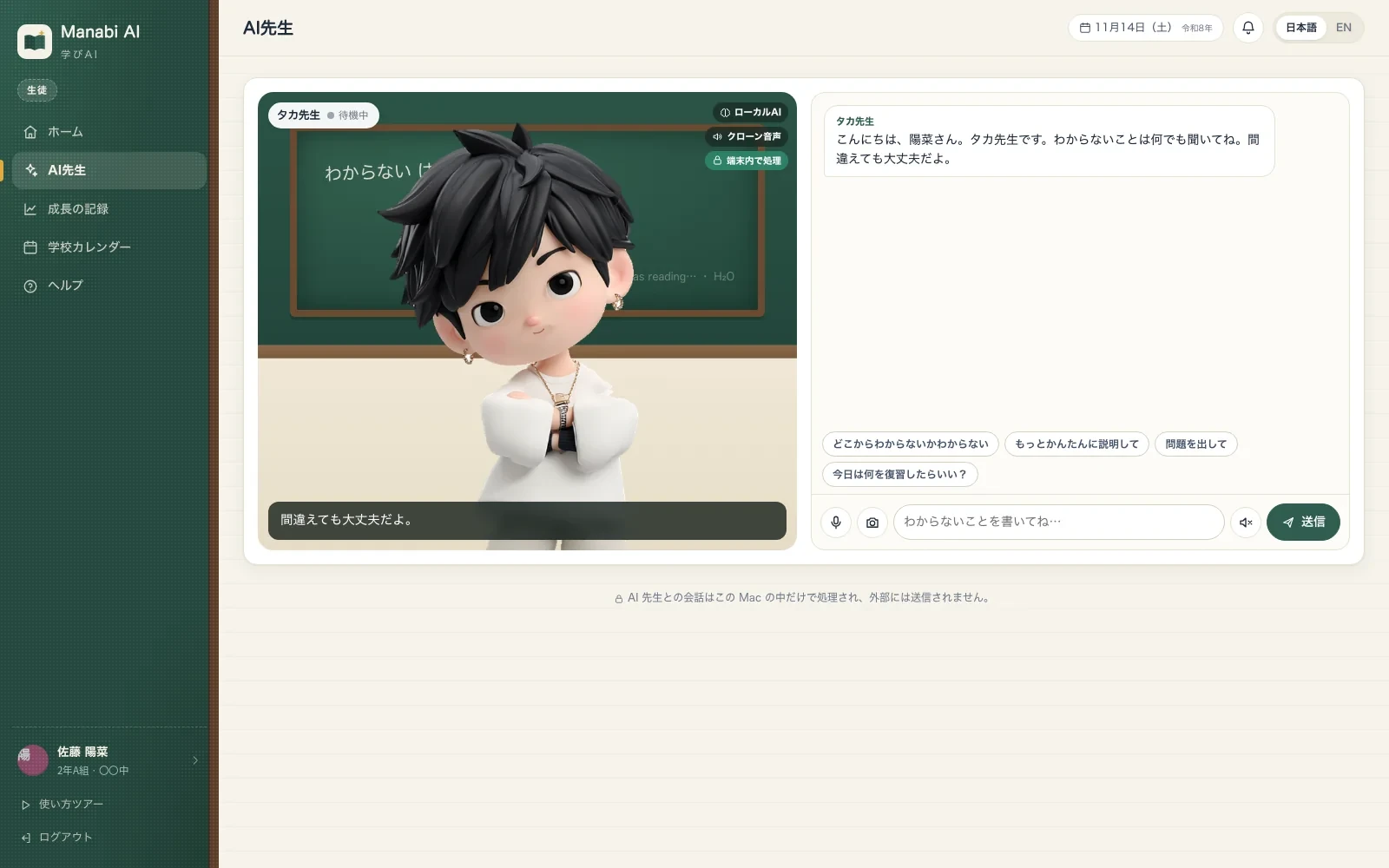
- Student: learning at their own pace with Taka-sensei. No rankings.
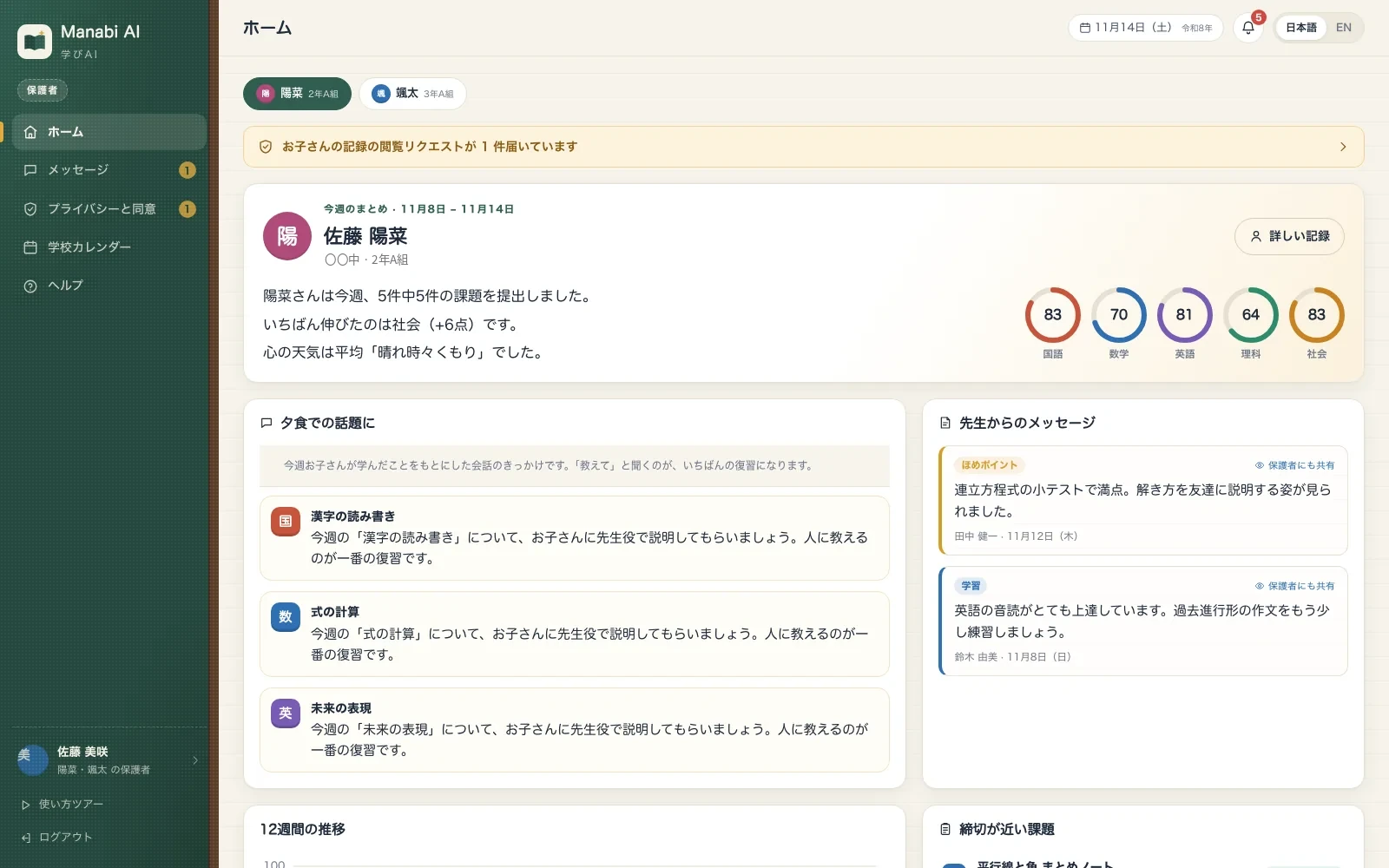
- Parent: a weekly summary in plain words, with topics to talk about at dinner.
Hints, one step at a time, not answers
Taka-sensei, powered by MetAI Tomo, gives hints little by little so students can solve problems themselves. Students can ask by voice, or send a photo of their notebook to find the first line where they went wrong. It answers following the materials the school has approved, so students can keep asking at home what they could not ask in class.
Helping teachers notice
Falling grades, repeated missing homework or a run of “rainy” mood check-ins are flagged automatically. The units students asked Taka-sensei about are counted per class, without names, so teachers can see where the class is stuck and decide what to cover at the start of the next lesson.
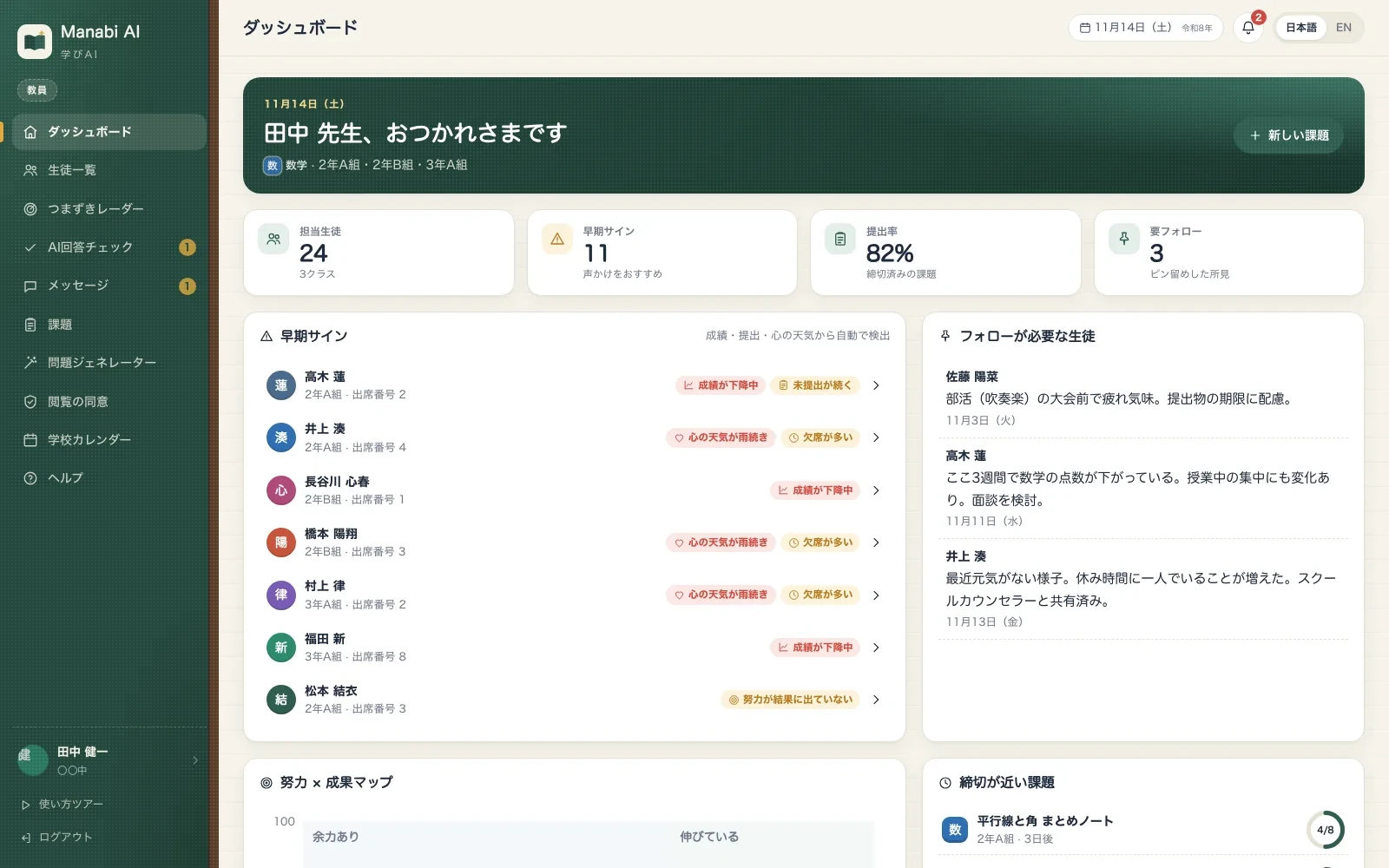
Writing questions is shared with AI too: choose subject, unit and difficulty, and a draft appears with three levels of hints and an explanation. Only what the teacher has checked and edited is published to the class.
For parents, in plain words
Not just grades: what the child worked hard on, messages from the teacher and topics for dinner. Detailed records are shown only with the parent’s consent.
Safe to use at school
- Runs only inside the school: the app and the AI run on the school’s PCs or servers. No data is sent to outside AI services, and no API key is needed.
- The AI does not give answers: it gives hints step by step and supports thinking.
- Teachers check first: questions written by AI are drafts.
- Visibility is controlled: viewing requires consent and is logged. There is no ranking.
We are looking for pilot schools
The current prototype covers the five core subjects of Japanese junior high school. Subjects and curricula for other school types will be designed together with pilot schools. You can start small: a conversation, a demo, then a pilot with one class.
To talk about a pilot or a demo, get in touch.
The screens shown are from a prototype in development. Student names and other data are demo data.